

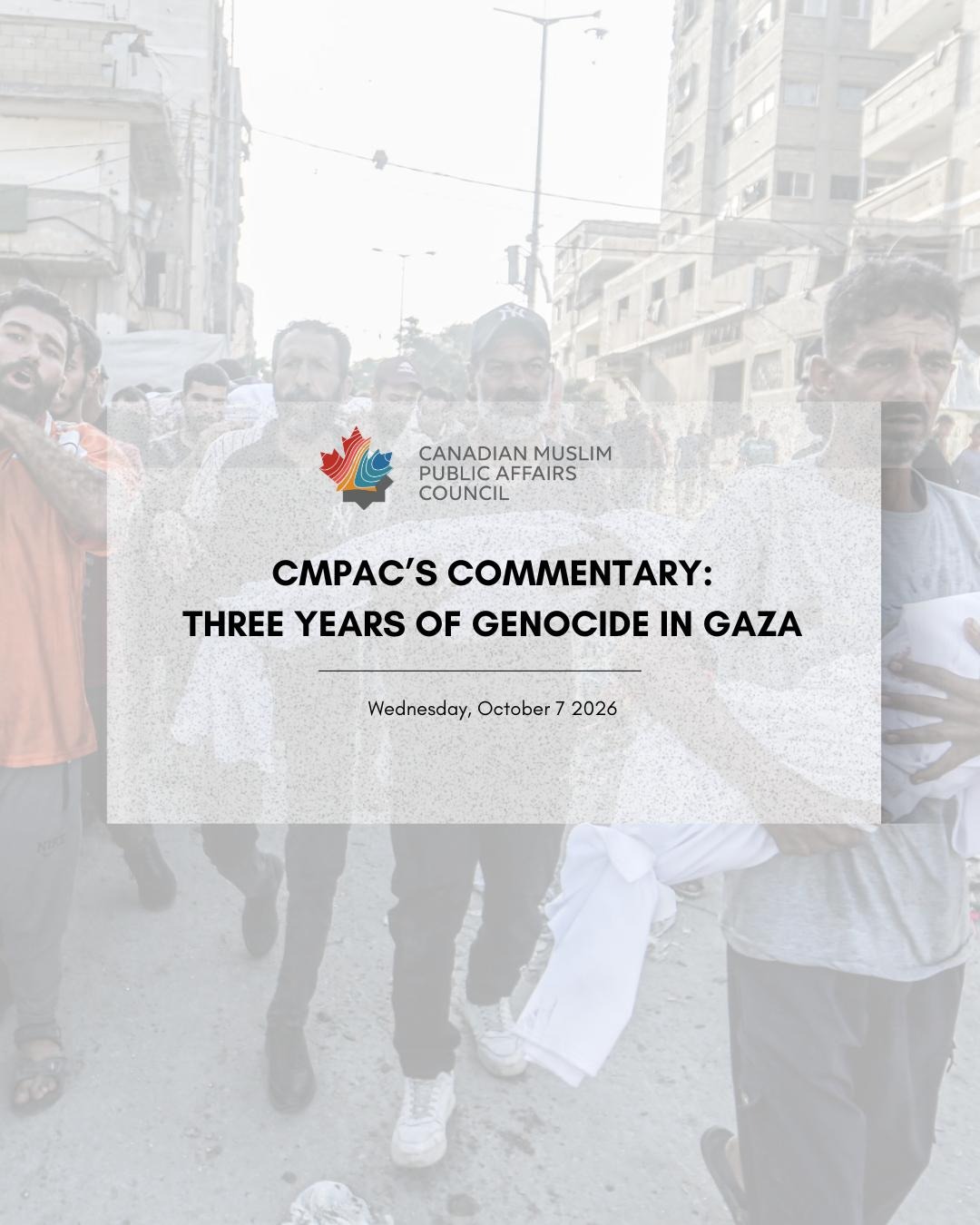
October 7, 2026
Over the past three years, the scale of the genocide in Gaza has been measured in lives lost and in the destruction of an entire society and the conditions necessary for people to survive and return home. More than 74,200 Palestinians have been confirmed killed by the Israeli military, including at least 21,638 children, while more than 8,000 people remain missing under the rubble and are presumed dead. Thousands more Palestinians from Gaza have been detained by Israel, many indefinitely and without charge or trial. Approximately 90% of Gaza’s population, around two million people, half of them children, have been forcibly displaced. At the same time, Israel has systematically destroyed homes, neighbourhoods and civilian infrastructure across the Gaza Strip, with at least 92% of homes damaged or destroyed, leaving much of Gaza uninhabitable.
The destruction has extended to the basic systems that make life possible. Nearly 90% of Gaza’s water and sanitation infrastructure has been damaged or destroyed, including desalination plants, water networks, sewage systems and wastewater facilities, leaving millions of people without reliable access to clean water and sanitation and increasing the risk of disease. Gaza’s healthcare system has also been devastated. The World Health Organization has documented at least 920 attacks on health facilities and health workers since 2023, with more than 1,700 health workers killed. Healthcare workers have also been detained, while hospitals and medical infrastructure have been repeatedly damaged, severely limiting access to emergency and routine care. The destruction has extended across housing, healthcare, education, water, sanitation, agriculture and other essential infrastructure, fundamentally altering the conditions of life for Palestinians in Gaza.
The legal accounting of this genocide and ongoing regime of subjugation rests upon clear, definitive rulings and detailed investigations issued by the highest international judicial bodies and human rights organizations. This international legal framework took formal shape when the International Court of Justice evaluated Israel’s continuous assault on Gaza under the 1948 Genocide Convention. In its landmark January 2024 order, the ICJ ruled that Palestinians face a risk of genocide and issued binding provisional measures requiring an immediate halt to actions contributing to their physical destruction. As the systematic destruction and blockade intensified, the ICJ issued further orders in March and May 2024, commanding an unhindered increase in humanitarian aid to counter deliberate, human-made famine and ordering an immediate halt to the military offensive in Rafah. Complementing this accounting of state responsibility, the International Criminal Court targeted individual criminal liability in November 2024 by issuing arrest warrants for Prime Minister Benjamin Netanyahu and former Defense Minister Yoav Gallant. Pre-Trial Chamber I determined there are reasonable grounds to believe both Israeli leaders bear criminal responsibility for war crimes and crimes against humanity, specifically detailing the calculated starvation of civilians as a method of warfare, the denial of essential survival supplies including food, water, medicine, and electricity, and intentional attacks directed against non-combatant populations. This framework of international lawlessness was further confirmed in July 2024, when the ICJ issued a historic Advisory Opinion concluding that Israel’s decades-long presence across Gaza, the West Bank, and East Jerusalem is entirely illegal, ruling that state practices, settlement expansion, and resource exploitation violate Article 3 of the Convention on the Elimination of All Forms of Racial Discrimination by enforcing systemic segregation and apartheid.
Beyond the active killing fields in Gaza, this violent infrastructure operates continuously across the occupied West Bank through state-sponsored settler violence, systematic land theft, and forced displacement, where state institutions and armed forces directly protect settler groups carrying out terror attacks against indigenous Palestinian communities. This territorial aggression is supported by an unprecedented expansion of arbitrary administrative detention, extrajudicial executions during military raids, and systemic, institutionalized abuse. Comprehensive documentation by the United Nations Office of the High Commissioner for Human Rights, alongside human rights organizations including Amnesty International and B’Tselem, reveals a widespread network of torture camps such as Sde Teiman. These official investigations detail systematic torture, waterboarding, electric shocks, prolonged sleep deprivation, severe beatings, and severe acts of sexual violence, including rape, carried out against blindfolded and bound Palestinian prisoners. Rights groups emphasize that these atrocities are not isolated acts of misconduct, but rather an intentional, state-sanctioned apparatus engineered to systematically degrade, torture, and crush Palestinian resistance. Recording these objective findings serves as both a solemn commemoration of every innocent life taken or shattered and an unassailable legal record, proving that full accountability, sanctions, and an end to foreign complicity are the only viable path to achieving justice for Palestine.
Canada has an essential role to play in promoting humanitarian restoration and protecting democratic freedoms both internationally and at home. The Canadian government should contribute meaningful state funding toward independent, unhindered humanitarian efforts aimed at rebuilding Gaza’s civilian infrastructure, health systems, housing, and public service capacity. Domestically, the federal government must uphold constitutional rights to free expression and academic freedom by rejecting restrictive definitions, such as the International Holocaust Remembrance Alliance (IHRA) working definition of antisemitism, which can be misapplied to limit lawful debate, academic research, or civic advocacy for Palestinian rights. Domestic policy responses to advocacy for Palestinian rights can have consequences that extend beyond their immediate application, particularly where measures risk constraining lawful political expression or establishing unequal standards for advocacy. CMPAC therefore calls for a policy approach that strengthens social cohesion while safeguarding fundamental rights and civil liberties. Furthermore, CMPAC remains unequivocally committed to combatting all forms of hate including Islamophobia, antisemitism, racism, and discrimination, while affirming that such efforts must remain consistent with Canada’s constitutional protections and international human rights obligations. Protecting communities from hate and protecting the right to advocate for Palestinian rights both must be upheld through coherent, rights-based public policy.
By holding individual actors accountable under international law, investing in the peaceful reconstruction of Gaza, and safeguarding civil liberties within Canada, the Canadian government can demonstrate true leadership in support of universal human rights and self-determination.
To align government policy with international law and the findings of the International Court of Justice and the Convention on the Prevention and Punishment of the Crime of Genocide, CMPAC calls on the Canadian government to take clear, principled action to end all state complicity in unlawful occupation, apartheid, and ongoing legal violations. The federal government should reevaluate preferential economic relations by reviewing and terminating the Canada-Israel Free Trade Agreement (CIFTA) and prohibiting commercial activity involving illegal settlements in occupied Palestinian territory. Canada should also apply sanctions and travel bans against individuals, political figures, and military personnel documented as responsible for war crimes, state-sanctioned settler violence, or severe human rights abuses. Furthermore, the government must establish a fully binding two-way arms embargo by halting both direct and indirect transfers of military goods and dual-use technologies, building upon and surpassing steps taken by international allies such as the United Kingdom. This commitment to legal consistency should extend to public and private institutions by encouraging federally funded academic and research bodies and international corporations to divest from entities connected to the military operations or settlement infrastructure of Israel.